Package reference
Reference · Packages
AskDB is a workspace of focused packages. Install the ones your use case needs. This page is the index — purpose, install, and key exports for each.
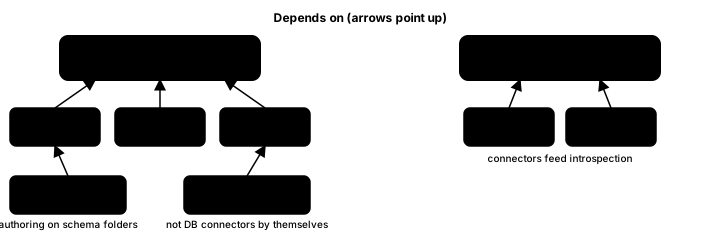
AI providers are built into @askdb/ai, which loads the matching AI SDK package (@ai-sdk/openai, @ai-sdk/azure, @ai-sdk/google, @ai-sdk/anthropic) on first use. @askdb/client sits above @askdb/core + @askdb/ai as the config-driven entry point.
@askdb/core
Section titled “@askdb/core”The dialect-agnostic NL-to-SQL pipeline. Schema loading, prompt construction, validation, and tenant-scope handling all live here.
npm install @askdb/core aipnpm add @askdb/core aiyarn add @askdb/core aiai (the Vercel AI SDK) is a required peer dependency of @askdb/core, with the range ^6.0.0 || ^7.0.51 (AI SDK 6, or 7.0.51 and later). Your app owns its version: ask() receives a model your app constructs, so core uses your app’s ai instead of bundling its own — upgrading AskDB never forces an AI SDK upgrade on the rest of your app. Build the model with an AI SDK provider package (for example @ai-sdk/openai), or through the config-driven path (@askdb/ai and @askdb/client), which currently requires AI SDK 7.
Every package on this page that depends on @askdb/core also needs ai installed, even if you only introspect and never generate SQL. That covers @askdb/client, the engine adapters, @askdb/introspect, @askdb/prisma, @askdb/enrich and @askdb/rag. Core loads ai when it is imported. npm 7+ and pnpm install the missing peer for you. Yarn doesn’t, so the install commands on this page list ai explicitly.
Key exports
| Symbol | Purpose |
|---|---|
ask(options) | The main pipeline. Returns checked SQL. See full API reference. |
loadSchema(path) | Load a schema artifact from a directory, bundle, or schema.json. |
validateTenantScope / resolveTenantSql | Tenant-scope validation and placeholder binding. |
createAskDbLogger | Structured logger that emits AskDB log events. |
POSTGRES_DIALECT and built-in dialect IDs | Dialect inputs accepted by ask(). |
AskDbLanguageModel | AskDB’s public name for the AI SDK language model contract. |
AskUsage | Token usage type returned in AskPipelineResult. |
See the @askdb/core API reference for the full option and return-type documentation.
@askdb/client
Section titled “@askdb/client”Config-aware facade over @askdb/core. createAskDb() resolves the schema, model, and dialect from your askdb.config.* (with every @askdb/ai built-in provider registered by default), so call sites pass only a question. Install it when you want the shortest config-driven path; skip it when you construct the model and load the schema yourself and call ask() directly.
npm install @askdb/client @askdb/core @askdb/config ai @ai-sdk/openaipnpm add @askdb/client @askdb/core @askdb/config ai @ai-sdk/openaiyarn add @askdb/client @askdb/core @askdb/config ai @ai-sdk/openaiKey exports
| Symbol | Purpose |
|---|---|
createAskDb(options) | Build a client bound to a config. Registers every built-in AI provider by default; providers: ["openai"] restricts the set, adapter objects add custom providers, or pass a prebuilt registry. Returns { ask, reload }. Options include unknownDialect: "throw" | "fallback-postgres" for artifacts recorded by an unrecognized provider. |
client.ask(question, overrides?) | Resolve schema/model/dialect and run the pipeline. Overrides: schema, model, dialect, plus all ask() options. |
AskDbClient / CreateAskDbOptions / AskOverrides | Types for the client, constructor options, and per-call overrides. |
SchemaLoadError / SchemaNotConfiguredError / ModelNotConfiguredError / DialectNotSupportedError | Typed errors for the resolution steps — catch these to map failures to your own error handling. |
See the @askdb/client API reference for the full option documentation.
@askdb/ai
Section titled “@askdb/ai”AI provider registry with built-in providers for OpenAI, Azure OpenAI / Microsoft Foundry, Google Gemini, Anthropic, and the Vercel AI Gateway. @askdb/client depends on it and builds the registry for you. Import it yourself to build a model object outside the client (createAiRegistry().createLanguageModelFromEnv(...)), to restrict or extend the provider set, or to share one registry across several clients.
npm install @askdb/ai aipnpm add @askdb/ai aiyarn add @askdb/ai aiKey exports
| Symbol | Purpose |
|---|---|
createAiRegistry(providers?) | Build a registry and create language or embedding models from it. No argument: every built-in provider. Or pass built-in names (["openai"]) and/or AiProviderAdapter objects. |
BUILTIN_AI_PROVIDERS | Table of built-in providers: names, aliases, env vars, default models, and the SDK package each needs. |
openaiProvider, azureProvider, googleProvider, anthropicProvider, gatewayProvider | The built-in adapters, if you want to pass them as objects. |
registry.resolveAiConfig(env) / registry.resolveEmbeddingConfig(env) | Resolve provider config from env without constructing a model. These are methods on the registry returned by createAiRegistry, not standalone exports. |
resolveBaseConfig | Low-level helper — resolves a provider’s base config object from an env map. Used internally by adapters. |
withEmbeddingProviderOptions | Wraps an embedding model so dimensions/user reach the provider; an optional mapper renames them to the provider’s own settings (e.g. Gemini’s outputDimensionality). Shared across adapters. |
aiKeyMissingMessage | Shared human-readable missing-key guidance. |
Provider SDKs
Section titled “Provider SDKs”Each built-in provider loads its AI SDK package lazily. These packages are optional peer dependencies of @askdb/ai, so install the one for the provider your config selects. If it’s missing, model creation fails with Provider '<name>' requires the optional peer dependency @ai-sdk/<name>. Install it: npm i @ai-sdk/<name>. ai itself is a required peer of @askdb/ai: npm and pnpm install it automatically, but depend on ai directly when you want to pin the version. AskDB raises its ai floor only when it needs a newer version or a security fix, and that release’s changelog says which.
Any 4.x release of each @ai-sdk/* package works (the peer range is ^4.0.0), so AskDB doesn’t force a provider SDK upgrade. @askdb/client declares the same optional peers and passes them through to @askdb/ai, so with strict installs (Yarn Plug’n’Play) install the SDK in the package that depends on @askdb/client or @askdb/ai, as the install lines above do. Under Plug’n’Play the AI SDK also needs zod installed next to it (its own peer dependency). If you bundle your app, esbuild builds without the SDKs you didn’t install, and a missing one fails only when its provider first builds a model. webpack 5 stops with Module not found for each missing @ai-sdk/* package: install them, or list the ones you don’t use in externals (with ESM output, use externalsType: "module" and the bare package names):
// webpack.config.js: list the @ai-sdk/* packages you don't install.module.exports = { // ... externals: { "@ai-sdk/anthropic": "commonjs @ai-sdk/anthropic", "@ai-sdk/azure": "commonjs @ai-sdk/azure", "@ai-sdk/google": "commonjs @ai-sdk/google", },};npm install @ai-sdk/openaipnpm add @ai-sdk/openaiyarn add @ai-sdk/openainpm install @ai-sdk/anthropicpnpm add @ai-sdk/anthropicyarn add @ai-sdk/anthropicnpm install @ai-sdk/googlepnpm add @ai-sdk/googleyarn add @ai-sdk/googlenpm install @ai-sdk/azurepnpm add @ai-sdk/azureyarn add @ai-sdk/azureNothing extra: the gateway provider ships with ai.
The CLI, Studio, and the HTTP API already include all four SDKs. Unknown ai.provider values require a registered adapter. The built-ins are openai, azure (aliases azure-openai, foundry), google, anthropic, and gateway. For anything else, embed AskDB and pass your own AiProviderAdapter to createAiRegistry() or createAskDb({ providers }), or use an OpenAI-compatible endpoint via the openai provider and a custom base URL.
@askdb/config
Section titled “@askdb/config”Optional config bootstrap: .env and askdb.config.* discovery, type-safe defineConfig, and a runtime snapshot accessor.
npm install @askdb/configpnpm add @askdb/configyarn add @askdb/configKey exports
| Symbol | Purpose |
|---|---|
defineConfig(config) | Type-safe config builder. |
bootstrapAskDbEnv(options) | Load .env + askdb.config.* and install the runtime snapshot. |
getAskDbRuntimeConfig() | Read the runtime snapshot (preferred over process.env). |
discoverAskDbConfigPath() | Programmatic config-file discovery. |
env, requiredEnv | Typed env-var accessors. |
isAskDbDebugEnabled() | true when the ASKDB_DEBUG shell variable is 1 or true; works without a loaded config. |
For tools that write a new askdb.config.ts, the @askdb/config/scaffold entry point exports renderAskDbAiConfigScaffold(input). It renders the config’s ai block (the provider connection in ai.providerConfig, plus ai.language.model read from an env var when one is given) and lists the env vars that block reads. askdb init and Studio’s setup wizard use it. Your own askdb.config.ts never needs it.
Engine adapters
Section titled “Engine adapters”Each engine package ships the introspection connector for its engine, any catalog SQL templates, and a re-export of that engine’s dialect constant. Its connector provider adapter parses the engine’s connection strings into display-safe parts, so registry.connectionLabel() and the sourceLabel from registry.resolveConnection() turn postgres://app:S3cret@db:5432/app into postgres://db:5432/app, and a string the engine can’t parse cleanly into configured <engine> connection. The label never contains a user name, password, or query string. The dialect specs themselves (SQL generation + validation rules) live in @askdb/core — ask() needs only the dialect id, no engine package.
@askdb/postgres
Section titled “@askdb/postgres”npm install @askdb/postgres aipnpm add @askdb/postgres aiyarn add @askdb/postgres aiPostgreSQL dialect, connector, catalog SQL templates, and an optional pg-based catalog query runner for live introspection. Pass dialect: "postgres" to ask().
@askdb/mysql
Section titled “@askdb/mysql”npm install @askdb/mysql aipnpm add @askdb/mysql aiyarn add @askdb/mysql aiMySQL dialect, connector, catalog SQL templates, and an optional mysql2-based catalog query runner for live introspection. Pass dialect: "mysql" to ask().
@askdb/sqlite
Section titled “@askdb/sqlite”npm install @askdb/sqlite aipnpm add @askdb/sqlite aiyarn add @askdb/sqlite aiSQLite dialect, connector, catalog SQL templates, and an optional better-sqlite3-based catalog query runner for live introspection. Works with embedded file-backed databases. Pass dialect: "sqlite" to ask().
@askdb/sqlserver
Section titled “@askdb/sqlserver”npm install @askdb/sqlserver aipnpm add @askdb/sqlserver aiyarn add @askdb/sqlserver aiSQL Server (T-SQL) dialect, connector, catalog SQL templates, and an optional mssql-based catalog query runner for live introspection. Pass dialect: "sqlserver" to ask().
Introspection
Section titled “Introspection”@askdb/introspect
Section titled “@askdb/introspect”The engine-agnostic introspection contract and the schema-directory writer. Use directly only when you’re calling introspection from your own code — the CLI wraps this for you.
npm install @askdb/introspect aipnpm add @askdb/introspect aiyarn add @askdb/introspect aiTo get the exact schema.json bytes without writing anything (a preview or a drift check), call renderSchemaV2Body(result.schema, { schemaId, provider: result.provider, existingArtifactDir }). Its options type is RenderBodyOptions (schemaId, optional provider and existingArtifactDir), and it returns a RenderBodyResult: { json, body, warnings }, the Schema v2 document, the exact file contents and the merge warnings. It applies the same merge introspect() does when writing (human-set sensitive flags carried over from an existing artifact), and backs askdb introspect --out, --print and --diff. isSchemaV2Json(value) is the check it applies to an existing schema.json before merging (the shape the merge reads: version, schema id, table and column ids, names and types, and boolean sensitive flags; not every field of Schema v2), for callers that need to decide up front.
It also exports the connector provider registry, which config-driven hosts use to pick an engine by id. Each engine package exports a ConnectorProviderAdapter (postgresConnectorProvider, mysqlConnectorProvider, sqliteConnectorProvider, sqlServerConnectorProvider, prismaConnectorProvider). Provider ids are open strings, so a third-party engine can register its own id.
| Symbol | Purpose |
|---|---|
introspect(input, renderOptions, { connector }) | Run a connector and write the schema directory. |
createConnectorRegistry(adapters) | Build a registry from provider adapters. Returns { hasProvider, providers, createConnector, getTemplates, resolveConnection, connectionLabel }. |
registry.resolveConnection(provider, { explicit?, runtime, surface? }) | Let the engine’s adapter merge explicit values (for example --url) with AskDB runtime config (getAskDbRuntimeConfig()). Returns { ok, connection, sourceLabel } or { ok: false, error }. sourceLabel is registry.connectionLabel(provider, connection), so it is safe to display for every adapter. |
registry.connectionLabel(provider, { url?, fromExport?, schemaPath? }) | A label that is safe to display or log, for any adapter: the registry builds it with formatConnectionLabel from the parts the adapter’s connectionLabelParts hook parses (host, port, database, or a file path). A connection that doesn’t parse cleanly, or an adapter without the hook, gets configured <engine> connection. |
ConnectorConnection | The connection connectionLabel and an adapter’s connectionLabelParts read: { url?, fromExport?, schemaPath? }. |
ConnectionLabelParts, formatConnectionLabel(engine, parts), parseConnectionUrl(input, schemes) | From @askdb/introspect/kit: what connectionLabelParts returns ({ host?, port?, database? }, or { file }), the allowlisted label builder, and a strict standard-URL parser for engines whose driver has no parser to reuse. The built-in engines don’t use the parser: Postgres takes its parts from pg-connection-string and SQL Server’s ADO.NET strings from @tediousjs/connection-string, the parsers their drivers use; MySQL reads a mysql:// URL with the mapping mysql2 applies; SQL Server’s mssql:// and Prisma-style sqlserver:// URLs go through @askdb/sqlserver’s own connection parser; SQLite labels the file path. |
ConnectorProviderAdapter | The adapter shape: createConnector, plus optional resolveConnection, connectionLabelParts, getTemplates. |
ConnectorProviderAdapters | What createConnectorRegistry takes: an array of adapters, or an object keyed by provider id. |
ConnectorProviderId, BuiltInConnectorProvider, BUILT_IN_CONNECTOR_PROVIDERS | A provider id is any string; BuiltInConnectorProvider is the union of the first-party ids, which BUILT_IN_CONNECTOR_PROVIDERS lists (postgres, prisma, mysql, sqlite, sqlserver). |
connectorProviderMissingMessage(provider) | The error text for an unregistered provider: Install @askdb/<id> for a built-in id, otherwise the package that provides it. |
ConnectorConfig, ConnectorResult | What createConnector takes (provider, the connection fields, filters, schemaId) and returns ({ connector, input, mode }). |
ConnectorConnectionRequest, ConnectorRuntimeConfig | What resolveConnection takes: { explicit?, runtime, surface? }, where runtime is getAskDbRuntimeConfig() (typed structurally: introspection and optional structured). |
ConnectorConnectionResult, ConnectorConnectionResolution | What an adapter’s resolveConnection hook returns ({ ok, connection } or { ok: false, error }), and what registry.resolveConnection returns (the same, plus sourceLabel). |
The @askdb/introspect/kit subpath holds the shared helpers the engine packages are built on — optional-driver loading (createOptionalDriverLoader, isDriverInstalled, missingDriverMessage for the first-party engines’ install hint, and rethrowDriverImportError to chain on your driver’s import() so bundlers treat it as optional), the live-catalog adapter builder (defineLiveConnectorProvider, with LiveConnectorProviderSpec and LiveCatalogInput), runtimeIntrospectionString for reading an engine’s string from AskDB runtime config, table-glob filters (compileTableFilters, ambiguousFilterWarnings), Schema v2 ids (makeTableId, makeColumnId), catalog-row folding (rowsToRecords, groupBy, buildOrderedGroups, byName, sortedUnique, mapFkAction), and connection labels (formatConnectionLabel, parseConnectionUrl). Its types are OptionalDriverSpec (what createOptionalDriverLoader takes), OptionalDriverLoader (what it returns), DriverLoadOptions ({ resolveFrom? }), GlobMatcher (what compileTableFilters returns), RowsToRecordsOptions and ConnectionLabelParts. Import it when you write a connector for a new engine.
@askdb/prisma
Section titled “@askdb/prisma”File-only connector that reads .prisma schema files and produces AskDB physical metadata — no live database needed. Pair with an engine adapter for SQL generation at runtime.
npm install @askdb/prisma @askdb/introspect aipnpm add @askdb/prisma @askdb/introspect aiyarn add @askdb/prisma @askdb/introspect aiSee the Prisma integration guide.
Authoring
Section titled “Authoring”@askdb/studio
Section titled “@askdb/studio”Browser-based schema-authoring UI. The CLI’s askdb studio command lazy-imports this package. Schema browsing, enrichment, and SQL generation do not require a database driver. The Query Playground’s live execute feature supports Postgres, MySQL, SQLite, and SQL Server — each requires its own optional peer driver package.
npm install @askdb/studiopnpm add @askdb/studioyarn add @askdb/studio| Execute provider | Package |
|---|---|
| Postgres | pg (optional peer) |
| MySQL | mysql2 (optional peer) |
| SQLite | better-sqlite3 (optional peer) |
| SQL Server | mssql (optional peer) |
Install only the package for your dialect. The execute provider is inferred from your active introspection provider unless overridden with studio.execute.provider.
@askdb/studio lists all four packages as dev dependencies for local package development and CI type-checking. This is not a requirement for your application — only install the driver you need at runtime.
See Studio — driver packages and Configuration reference — Studio execute for setup details.
@askdb/enrich
Section titled “@askdb/enrich”Headless schema-authoring helpers used by Studio. Use directly when building a custom authoring surface.
npm install @askdb/enrich aipnpm add @askdb/enrich aiyarn add @askdb/enrich aiRetrieval
Section titled “Retrieval”@askdb/rag
Section titled “@askdb/rag”Chunks the schema artifact, indexes it in a vector store, and retrieves relevant chunks per question. Use with ask()’s retriever option for large schemas. Always install ai: @askdb/rag depends on @askdb/core, which loads ai when it is imported, even with a custom embedder or the in-memory or file store. Install @ai-sdk/openai and pg only if your embedder and vector store use them; they are optional peers. Their AI SDK 7 floors (ai ^7.0.51, @ai-sdk/openai ^4.0.29) move the same way as the adapters’ ai floor; the AI SDK 6 floors (^6.0.0, ^3.0.0) move only on purpose, with the AI SDK 6 install smoke’s pins.
npm install @askdb/rag aipnpm add @askdb/rag aiyarn add @askdb/rag aiKey exports
| Symbol | Purpose |
|---|---|
buildSchemaIndex({ schema, store, embedder, ... }) | Chunk + embed + upsert a schema artifact; returns { retriever, stats, chunks }. |
createAiSdkEmbedder({ model }) / createOpenAiEmbedder(...) | Wrap an AI SDK embedding model (or raw OpenAI) as the embedder. |
createRetriever({ store, embedder }) | Build the retriever passed to ask(). |
createPgvectorStore | The pgvector store factory. |
detectEmbeddingDimensions(embedder) | Learn an embedder’s vector width with one short embedding call, for a new pgvector table. |
aiSdkEmbedderId({ provider, model, dimensions }) | The embedderId Studio and askdb rag record for an ai.embedding model, so a host can share their indexes. |
loadChunkerSourcesFromDir(path) | Load a schema directory into chunker format (includes markdown). |
The command line for it is the askdb package’s askdb rag, with three commands — index, query, and setup-store (pgvector provisioning). The askdb-rag binary @askdb/rag used to run them only points there until 1.0. See RAG for large schemas.
See the @askdb/rag API reference for the full option and type documentation.
Service surfaces
Section titled “Service surfaces”@askdb/http-api
Section titled “@askdb/http-api”Minimal HTTP server wrapping ask(). Two endpoints (/health, POST /ask), designed to sit behind your gateway.
npm install @askdb/http-apipnpm add @askdb/http-apiyarn add @askdb/http-apiKey exports
| Symbol | Purpose |
|---|---|
createAskDbHttpServer(options) | Build the server. |
AskHttpRequest / AskHttpSuccessResponse / AskHttpErrorResponse | Request and response types. |
See the HTTP API reference for endpoints and error codes.
askdb (CLI)
Section titled “askdb (CLI)”The askdb binary. Ships as a normal npm package — install for local development, demos, and CI.
npm install askdbpnpm add askdbyarn add askdbSee the CLI reference.
Dependency direction
Section titled “Dependency direction”| Package | Depends on |
|---|---|
@askdb/core | AI SDK core package (ai, AI SDK 6 or 7) as a required peer |
@askdb/introspect | @askdb/core |
@askdb/postgres, @askdb/mysql, @askdb/sqlite, @askdb/sqlserver | @askdb/core, @askdb/introspect |
@askdb/prisma | @askdb/introspect |
@askdb/ai | AI SDK core package (ai); @ai-sdk/* provider packages as optional peers |
@askdb/enrich, @askdb/rag | @askdb/core |
@askdb/studio | @askdb/enrich (+ @askdb/rag when used) |
@askdb/http-api | @askdb/core (+ engine adapter) |
askdb (CLI) | All of the above (lazy-imported per command) |
Reusable packages stay small and layered. First-party surfaces (CLI, Studio, HTTP API) compose them.
What to install — by use case
Section titled “What to install — by use case”askdb alone is enough to introspect, enrich, and ask from the CLI.Embedding in a Node service@askdb/client + @askdb/core + @askdb/config + ai + an AI SDK provider package such as @ai-sdk/openai.Standing up an HTTP serviceAdd @askdb/http-api on top of the embedding install.Working with a large schemaAdd @askdb/rag and a vector store (pgvector recommended).Removed packages
Section titled “Removed packages”These packages were removed before 1.0 (#347). Their last versions stay on npm, so existing installs keep working, but they get no fixes. If your app still imports one, switch to its replacement.
| Removed package | Last version | Use instead |
|---|---|---|
@askdb/ai-openai | 1.0.0-beta.8 | @askdb/ai and @ai-sdk/openai |
@askdb/ai-azure | 1.0.0-beta.8 | @askdb/ai and @ai-sdk/azure |
@askdb/ai-google | 1.0.0-beta.8 | @askdb/ai and @ai-sdk/google |
@askdb/ai-anthropic | 1.0.0-beta.6 | @askdb/ai and @ai-sdk/anthropic |
@askdb/connectors | 0.1.0-beta.9 | @askdb/introspect for the connector registry and its types, and @askdb/introspect/kit for formatConnectionLabel and parseConnectionUrl |
The @askdb/ai-* packages only re-exported @askdb/ai’s built-in providers. createAskDb({ config }) and createAiRegistry() register every built-in provider, so drop providers: [openaiProvider], or pass names such as providers: ["openai"] to restrict the set. openaiProvider, azureProvider, googleProvider and anthropicProvider are exported from @askdb/ai. From @askdb/connectors, CONNECTOR_PROVIDERS is now BUILT_IN_CONNECTOR_PROVIDERS, and ConnectorProvider is now ConnectorProviderId.
Read next
Section titled “Read next”ask() options, result fields, dialects, modes, and logging.@askdb/client APIcreateAskDb() and per-call overrides.@askdb/rag APIbuildSchemaIndex(), embedders, and vector stores.CLI referenceThe askdb binary in detail.HTTP API referenceEndpoints, request and response shapes.Configuration referencedefineConfig and the env-var matrix.© 2026 Yahya Gilany